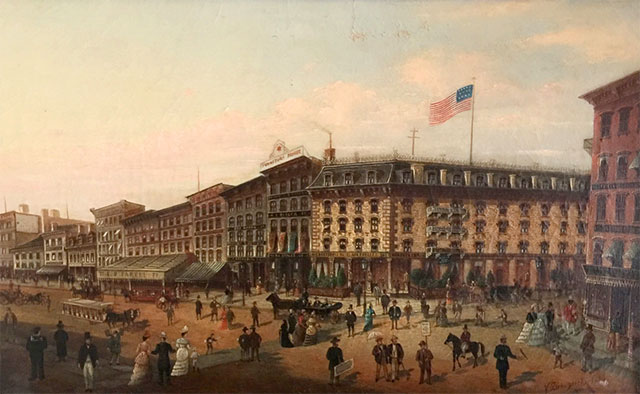
1874: Summit Hotel 65 Bowery corner Canal street, rooms by the day and week; 50c, 60c, 75c and $1 per night, heated by steam, weekly prices reduced, B. Breder Proprietor (New York Herald 04 January 1874)
1876/77: Gouldings New York City Directory: Summit Hotel 65 Bowery
1880: "Frederick Albers was rendered unconscious by inhaling water gas at Summit Hotel, Bowery, and was with with great difficulty revived." N. Y. Tribune, December 27, 1880. (Report of the Commissioner of Health on Illuminating Gas)
1880: August 10, 1880 New York Times A man who gave the name, William Schmidt, registered at the Summit Hotel at No. 65 Bowery. He drank a "shoppen" of red wine at the bar and then retired to his room. some time later a maid heard strange noises coming form the room. Upon investigation it was discovered that he had committed suicide by strangulation. His identity was later established as R. G. Tuelff, age 36, born in Silesia. The head line was "SUICIDE CAUSED BY RUM'
1883: "Eliza Wagner Mauchwitz, a disowned daughter of Baron Von Stein and a graduate of the royal medical college of Saxony, killed herself last week by inhaling gas in her bedroom at the Summit Hotel, 65 Bowery, New York city". June 1883 (Argus and Patriot Montpelier Vermont)
Mrs. M. E. Wagner Nanshurtz a married woman and graduate of the Royal Medical college of Saxony was found dead in her room (The Brooklyn Union)
The room was broken into when the smell of gas attracted attention. It was a clear act of suicide as strips of brown paper had been pasted over the cracks in the door and a straw mattress had been pushed up against the door. The window had been covered with a thick blanket. The gas had been turned on but was not lit.
"Mrs. E. A. Wagner, at Manchurtz, a graduate of the Royal Medical College, Saxony and the daughter of Baron Von Stein, a wealthy German land owner, committed suicide at the Bowery Hotel. ... She was disowned for marrying against the wishes of her parents and it is supposed that lack of funds led to the act." (the Butte Weekly Miner 30 May 1883 & other papers) It was said she ran away from home with a married man or married a man her parents did not approve of.
1893: "Dyer D Lum, greenbacker and anarchist, was found dead in his bed at the Summit Hotel, 65 bowery". He had registered under the name D. Miller (which was said to be his real name). Cause of death was determined to have been heart failure but it was noted in some papers that he had recently been drinking heavily. Lum was 51 and had been born in Northampton, Mass. He had fought on the Union side during the Civil war and when the war ended allied himself with the greenbackers*. 09 April 1893 San Francisco Chronicle
*a post Civil War political party who opposed reducing the amount of paper money in circulation.
1901: Western Union Telegraph Office 65 Bowery - Summit Hotel
1905: Walter Essler, married, about 30 years old and a well dressed farmer from Huguenot Station, Staten Island, was discovered unconscious in his room at the Summit Hotel 65 Bowery. He had taken eighteen morphine pills. He was taken to Chambers street Hospital and was expected to recover.
1908: "Cornelius Sullivan, a policeman attached to the Elizabeth street station, was arrested in the Summit Hotel. No 65 Bowery". The charge was drunkenness, disorderly conduct and "causing a crowd to collect". Sullivan, age 27, had been on the force for nine months. He had threatened to shoot the bartender. (Feb 4, 1908)
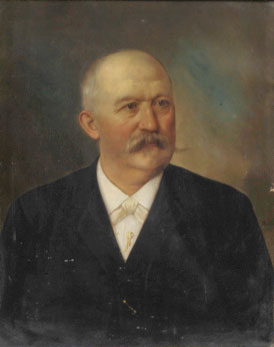 | |
| Otto Zimmerman owner of The Summit Hotel, Bowery & Canal. ca.1888 - Oil painting -
Image courtesy of Adam Woodward April 2018.
Polk's Directory of 1908 and 1913 listed Zimmermann, & son (Gustav & George T. Zimmermann) 65 Bowery. | |
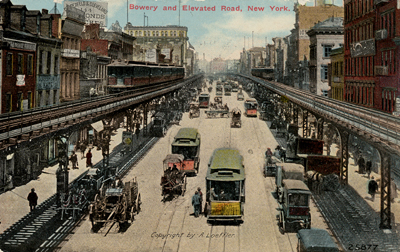 |
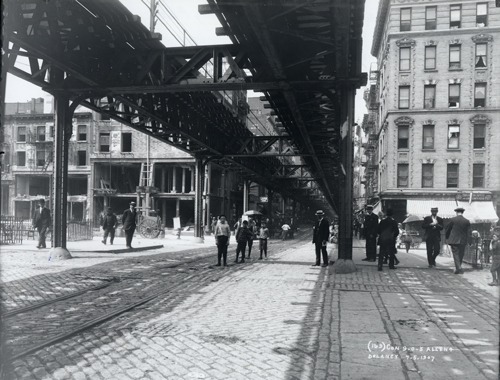
Bowery and Elevated Road, New York Post marked 1910 By the mid 1870's elevated trains ran along 2nd, 3rd, 6th and 9th Avenues. While they improved the speed of travel they were loud and caused pollution. |
| Postcard collection of Maggie Land Blanck | |
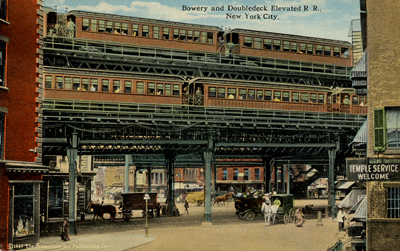 |
Bowery and Doubledeck Elevated R. R., New York City Not posted
|
| Postcard collection of Maggie Land Blanck |
Printed on back
The Bowery, one of the most noted thoroughfares in the city, runs in a northeasterly direction through the most congested district of the famous East side. It practically begins at the Brooklyn Bridge under the name of Park Row and ends at Cooper Square. Was formerly a part of the old Boston Post Road.
| |
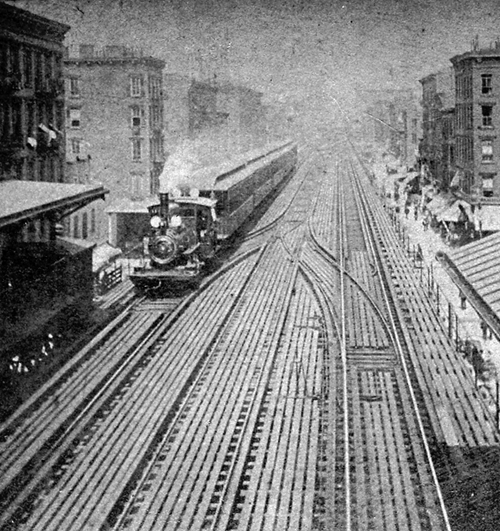
| |
| Collection of Maggie Land Blanck Third Avenue El — From Battery Park to Harlem along the Bowery and Third Avenue. | |
 | |
| New York Public Library ID 805719 A SATURDAY NIGHT SCENE IN THE BOWERY NEW YORK, HARPERS WEEKLY MAY 20, 1871 | |
"The Bowery is devoted mainly to the cheap trade. The children of Israel abound here. The display of goods in the shops flashy, and not often attractive. Few persons who have the means to buy elsewhere care to purchase an article in the Bowery,James Dabney McCabe on Sundays in the Bowery: "Broadway wears a silent and deserted aspect all day long, but towards sunset the Bowery brightens up wonderfully, and after nightfall the street is ablaze with a thousand gaslights. The low class theatres and places of amusement in that thoroughfare are opened towards dark, and then vice reigns triumphant in the Bowery. The Bowery beer-gardens do a good business. The most of them are provided with orchestras or huge orchestrions, and these play music from the ritual of the Roman Catholic Church. | |
 | |
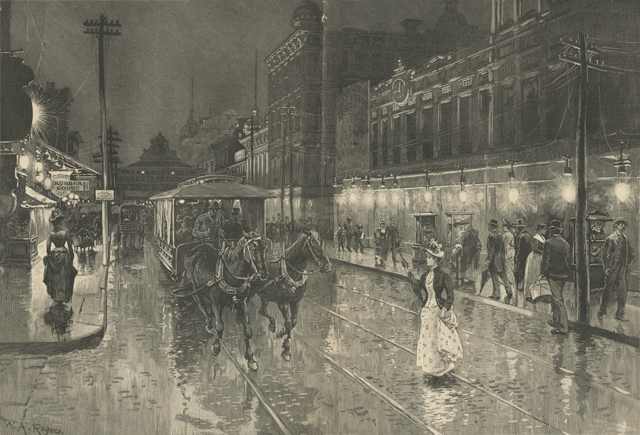
| William Louis Sonntag, Jr. (1822-1900), "The Bowery at Night"1895 | |
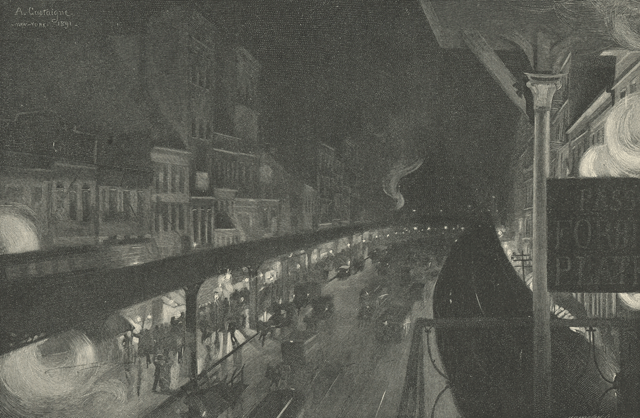 | |
| Collection of Maggie Land Blanck, The Centry Magazine, 1892
From a painting by Andre Castaigne, 1891 | |
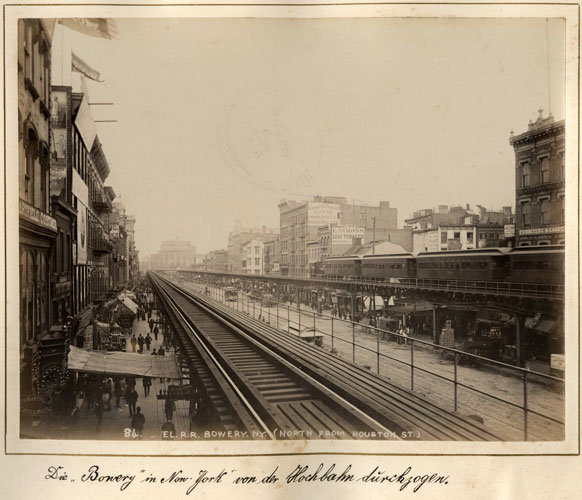 | |
| Collection of Adam Woodward - 2018
El R.R. Bowery NY North from Houston st.) Die Bowery in New York von der Hochbahn durchzogen
| |
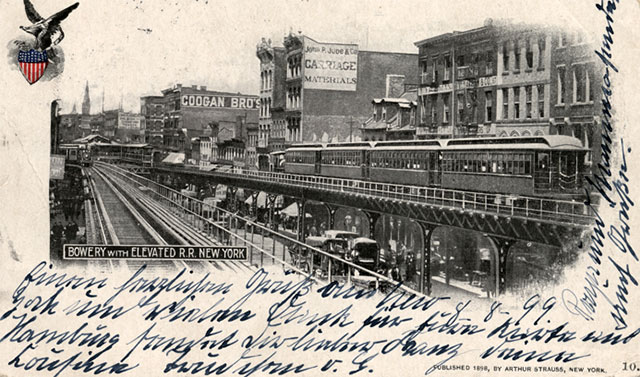 | |
| Collection of Adam Woodward - 2018
Printed 1898 by Arthur Strauss, New York For information on Coogan Brothers furniture and John P Jude carriage materials see Lower East Side Notables | |
|
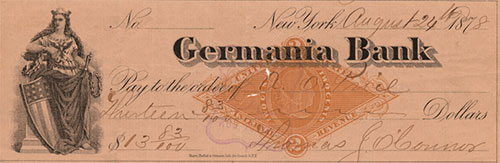
Germania Bank
The World Almanac and Book of Facts 1871 listed the following places of "amusement" on the Bowery:
| |
|
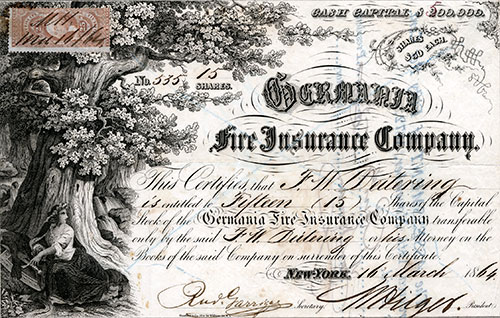
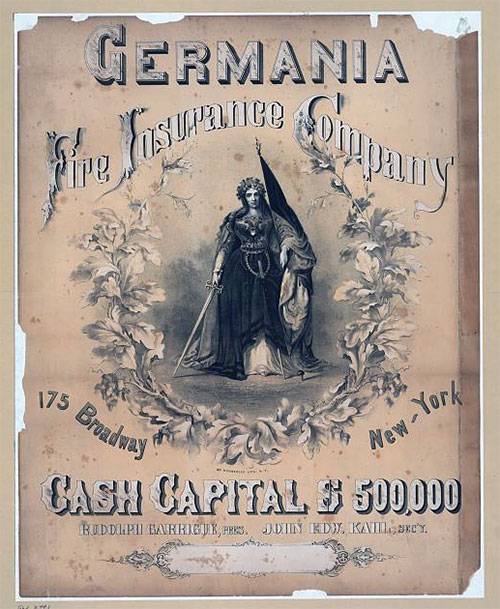
Germania Fire Insurance Company - 175 Broadway and 357 Bowery
The Germania Fire Insurance Company was founded in New York in 1858. The company
erected 175 Broadway in 1865 as noted by the date on the front of the
five story building. In 1870 they opened branch offices at 357 Bowery.
Cash Capital 500,000 - Germania Fire Insurance Company - This certifies that F. W. Deitering is entitled to fifteen (15) shares of the Capital Stock of the Germania Fire insurance Company transferable only by the said F. W. Deitering or his attorney on the books of said Company on surrender of this certificate. New York, 16, March 1864.Frederick W. Deitering was born circa 1814 in Germany and died in Hoboken, New Jersey in January 10, 1872. He was buried in Greenwood Cemetery Brooklyn. Germania Fire Insurance Company - 357 Bowery
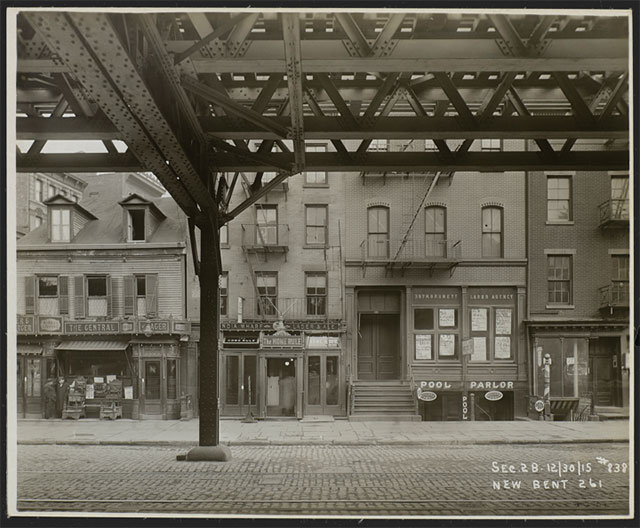
357 Bowery located near 4th street on the east side of the Bowery is the building with the pool parlor in the lowest level. The three and a half story building was erected in 1870. To the north of 357 this images includes 359 and 361 Bowery. A 1890-93 fire insurance map of the city show 359 Bowery as a brick building and 361 as a wooden building. 357 and 359 are still standing more less looking as they are show in this image. 361 as seen in this image no longer exists. 1895 - 359 Bowery: "I have sold on the Bowery ... 359 Bowery near Fourth street. Values are not the same at this section as they are at Fourth street, I think they are worth a little more down below Houston; that sale that I speak of was made in June, 1885 ; the lot was 21 feet wide by 70 feet three inches deep, and had four-story brick house on; I was broker for the seller; the property brought $22,250; since then changes have been made in the property, they took the front down and practically made a new building of it; at the time I sold it there was a furniture store."361 Bowery: Jesse Baldwin Jr. owned 361 Bowey in 1835. Circa 1835 James Crumbie [born circa 1810] was listed as a druggist at 361 Bowery [also listed as the corner of 4th and the Bowery]. Abram [Abraham] Polhemus had a grocery store at 361 Bowery from at least 1848 to at least 1865. In 1898 the following were listed for 361 and 357 Bowery - 361 Bowery, Bauer Charles, Bauer, Valentine, 357 Bowery. See Lower East Side Notables Museum of the City of New York Germania Fire Insurance - 175 Broadway
175 Broadway - New York Times Nov. 1, 2012
|
| Cooper Union
| |
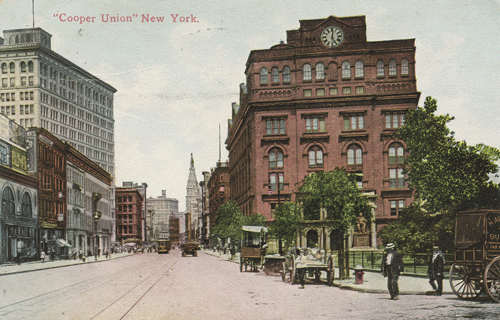 | |
| Collection of Maggie Land Blanck Cooper Union, New York. Posted 1911. Cooper Union located in Cooper Square (Bowery, Third Avenue and 7th Street) was founded in 1859 by Peter Cooper and offered free classes to everyone, regardless of race, gender, religion or social status. | |
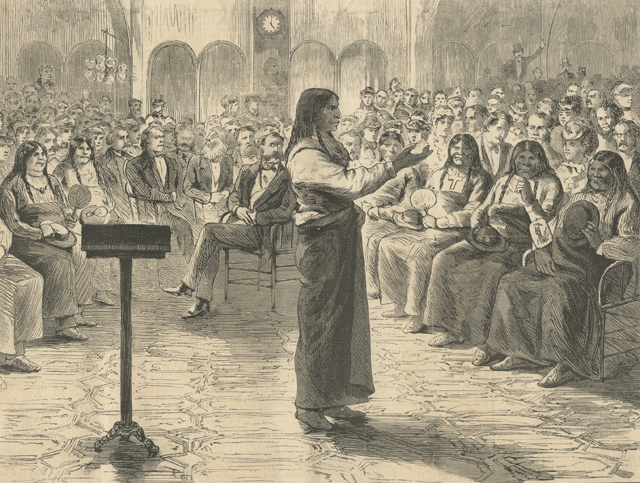 | |
| Collection of Maggie Land Blanck HARPER'S WEEKLY, July 2, 1870 Red Cloud, leader of the Oglala Kakota Sioux spoke at Cooper Institute in New York. An excerpt from his speech: "This was all very well until the Great Father sent another kind of men out there — men who drank whiskey; men who were so bad that the Great Father could not keep them at home, so he sent them out there"The article indicates that Red Cloud left the impression that his "expectations had not been met at Washington, and that his intentions were not altogether pacific." Red Cloud did not take part in the Lakota War of 1876-1877 (aka as the Great Sioux War) when Crazy Horse and Sitting Bull led their men in several battles against the United States Army. One of these battles was the the infamous battle of the Little Big Horn. On February 27, 1860 Abraham Lincoln gave an historic speech on slavery at Cooper Institute.
| |
| Forth Avenue Steinway Hall, East 14th Street near 4th ave concerts, The World Almanac and Book of Facts 1871 Steinway Hall was built in 1866. It contained concert halls, showrooms and sales rooms for Steinway pianos. Steinway Hall
| |
| Third Avenue Third Avenue was a heavily populated street lined with small shops. It did not contain any important public buildings, with the exception of Copper Union.
Cooper Institute Hall East 8th and 3rd ave, concerts and lectures, The World Almanac and Book of Facts 1871. See Cooper Union above. Scheffel Hall at 190 Third Ave was built in 1894-94. A beer garden and restaurant it was modeled after a 17th century building in Heidelberg, Germany. New York Architecture There was a trolley line on Third Avenue from 1853. The Second and Third Avenue lines ran together until Chatham Square. The Third Avenue line ran up the Bowery to Third Avenue (at 6th Street). Originally pulled by horses, the trollies were later run on cables. In 1899 electric cars were introduced. An elevated railway was constructed on Third Avenue in 1878. The trollies (or surface cars) and the El were built and operated by different companies. | |

| |
|
Postcard collection of Maggie Land Blanck, January 2012 Private Mailing Card, posted 1904, Cooper Union, 3rd Ave Elevated R. R., New York
| |
| Second Avenue Second Avenue also had a trolly line. | |
 | |
| The New Metropolis 1899, cut from book, collection of
Maggie Land Blanck SECOND AVENUE LOOKING NORTH FROM ST. MARK'S PLACE The two buildings on the right are the N. Y. Historical Society and the Second Avenue Baptist Church
"In the quaint and historic structure of St. Marks church, at Tenth Street, is an interesting landmark. For a time this was a part of the German quarter." | |
 | |
| Second Avenue and 11th Street
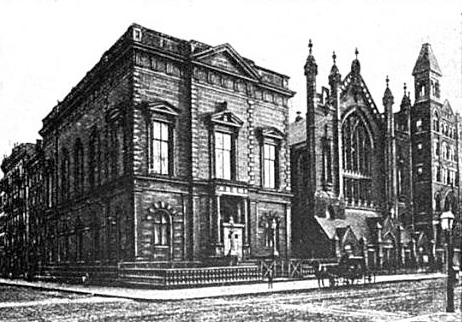
New York Historical Society and the Second Avenue
Baptist Church King's handbook of New York city: an outline history and description of the of the American metropolis, edited by Moses King, 1892 | |
 | |
| Collection of Maggie Land Blanck
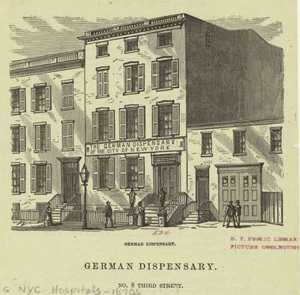
Located at 137 Second Avenue (near East 8th Street) the German
Dispensary was built in 1884. The Dispensary and the library next door were the
gifts of Anna and Oswald Ottendorfer the owners of the German/American newspaper,
Staats-Zeitung. The dispensary was originally founded in 1857.
| |
 | |
| New York Library Digital Gallery,
German Dispensary, 1840-1870, Print, No. 8 Third Street, Original Source:
From Manual of the Corporation of the city of New York. (New York : The Council,
1840-1870) New York (N.Y.). Common Council, Author,
Digital ID: 805213 The first facility of the German Dispensary was located at 132 Canal Street. In 1862 it moved to 3 East Third Street. By 1887 when it was located at 137 2nd Ave. the Dispensary was treating 28,000 patients a year, most from the neighboring German community. In 1905 the facility moved to Park Ave and 77th Street. It is now the Lenox Hill Hospital. | |
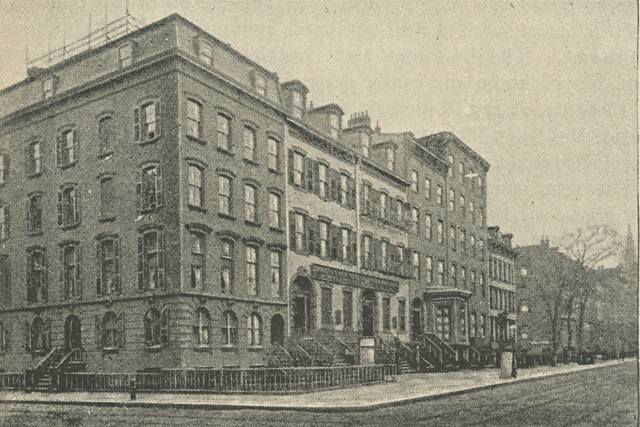 | |
| Cut from magazine, collection of
Maggie Land Blanck GERMAN BRANCH Y. M. C. A. 140 and 142 Second Avenue near 9th Street
"The German Branch, on Second Avenue, was organized in 1881 for work among the East-Side Germans, by whom it is greatly appreciated." | |
| Isaac T Hopper House 110 Second Avenue. Built 1837-38 Isaac T. Hopper House | |
HOUSE OF THE HOLY FAMILY, a
Catholic Charity at 134-136 Second Avenue was run by the Sisters of
Divine Compassion. It was an association for befriending children and young girls.
Established in 1870 its object was:
"The reformation and training, industrial, mental and religious, of girls not hardened by vice."There were 102 girls "cared for" in 1900. The King's handbook of New York City of 1892 shows a 6 story building with a plain facade. | |
| First Avenue
|
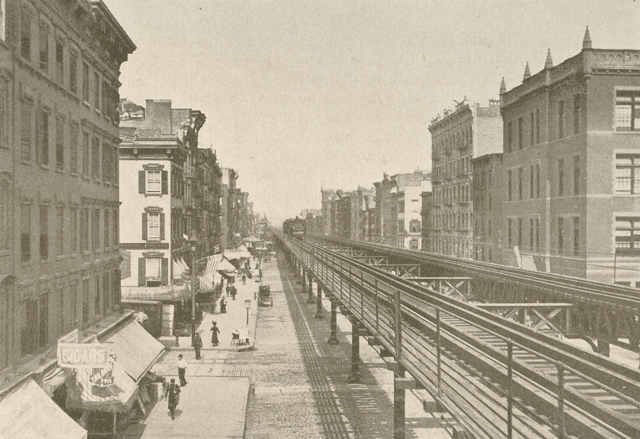 |
| The New Metropolis 1899, cut from book, collection of
Maggie Land Blanck FIRST AVENUE LOOKING NORTH FROM EAST EIGHTH STREET According to The New Metropolis, 1899 the elevated train gave First Avenue "an air of gloom and poverty". "It comprises mile after mile of small shops on its west side and generally factories on the eat side, or yards of lumber, coal or stone."There were apparently hundreds of cigar-makers on First Avenue "nearly all producing exceedingly cheap goods". |
| |
| Avenue A
| |
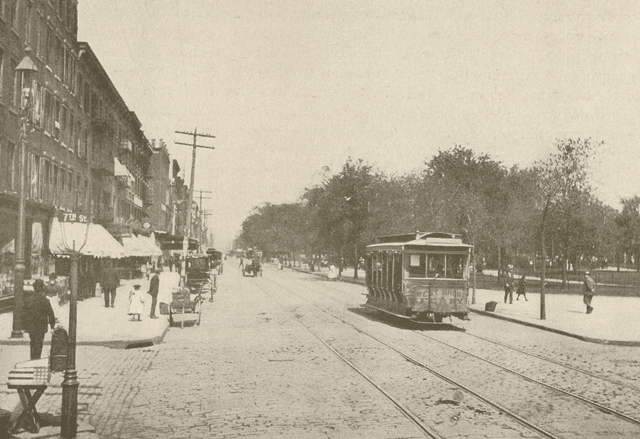 | |
| The New Metropolis 1899, cut from book, collection of
Maggie Land Blanck AVENUE A AND TOMPKINS SQUARE LOOKING NORTH FROM EAST SEVENTH STREET Avenue A was the main thoroughfare of the German community in Lower Manhattan. "Its entire lower end, from East Houston to Fourteenth Streets, is lined with shops that are German, spread with signs that are German, and promenaded by men and women who are, without question, prosperous German-Americans. A decade ago little else but the German tongue in its various dialects was heard here; now much English, though often a broken English, is to be heard. This is not because the Germans have moved, however. As a matter of fact there are more of this nationality about there than ever before, and Avenue A, for about fifteen blocks, is the pivotal center of "Kleine Deutchland". The reason of this gradual dropping of the German language is the influence of the growing generation which attends American schools. The older generation still speak the dialects of their native land. On the evenings just proceeding Christmas the curbs are lined with booths of decorations and toys, and it takes on an especially picturesque and foreign aspect. Avenue A abounds with "wein stubes," "bier Halles," bowling alleys, and numerous quaint shops."In 1861 Julius Lindemann was listed at 133 Avenue A. Julius Lindemann and his second wife, Catherine Furst Schwartzmeier Lindemann, lived at 133 Avenue A at the time of their marriage in 1863. I do not know when they moved, but in January 1865 the family was at 216 2nd Avenue. See Goehle Homes in New York City, Julius Lindemann and/or Catherine Furst Schwartzmeier Lindemann 133 is just north of St. Mark's (8th Street). A newer building is at that address today. | |
|
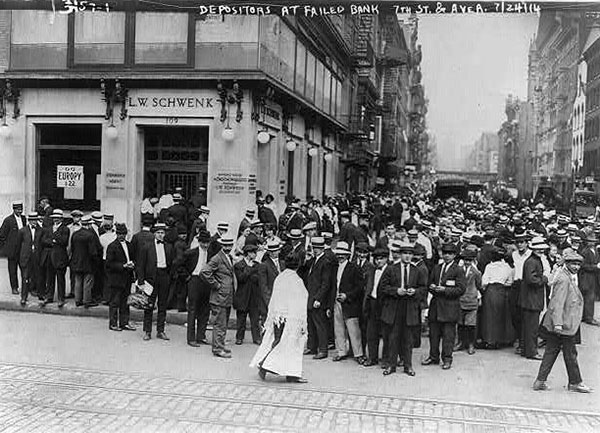
Schwenk Bank failure 1914, 7th street and Avenue A - Library of Congress 14 Ave. A In 1895 George Lutz Jr ran a florist at 14 A between 1st and 2nd streets. He was listed in the 1892 directory at that address.
70 Ave. A 1895: Keller Brothers Reliance Wine Company 70 Ave. A between 4th and 5th Ry and burbon Whiskeys Cognac Brandies 1892: Theodore Keller, wines 70 Avenue A - Keller, Bros wine 70 avenue A.
101 Ave. A 101 Avenue A, built in 1876 between 6th and 7th. The upper floors were apartments the ground floor pallor was used as a meeting place. In January 1895 the Journal of the Dauntless Pleasure Club* advertised:
| |
|
EXTRA! EXTRA! EXTRA!
Grover Cleveland - Benny Harrison L. P. Morgan Wm. L Strong and numerous other cele- brities have kindly accepted the invitation to attend the GRAND ANNUAL BALL of the HARMONIE PLEASURE CIRCLE on Saturday Evening April 6th, 1895 at G. Fritz's Hall, 101 Ave. A Hoping to meet all of our friends on this occasion. Yours respectfully Harmonie Pleasure Circle
| |
|
Professor Fred Witt's full orchestra played and Mr. William Kampf "the well known German Comedian"
and a strong company of performers entertained. Note: Grover Cleveland was president of the USA in two non consecutive terms 1885 - 89 and 1893 - 97. Benjamin Harrison was president in the term in between Cleveland's two terms. (1889-1893). Levi P Morton was vice president under Harrison and served as United States Ambassador to France, as a Representative from New York, and as the 31st Governor of New York. William L. Strong was the mayor of New York from 1895 to 1897.
In 1891 George Fritz, Liquors, was listed at 101 Ave. A in the city directory. In 1892 the East Side Ladies Aid Society was listed at 101 Ave. A (Directory of Social and Health Agencies of New York City, Volume 5) In 1892 The Marschner Mannerchor and the Arion Quartett Club were listed at Fritz Hall, 101 Ave. A. (Columbus-Feier Saenger-Verband: Festschrift fur das Columbus-Concert zur 400) In 1892 Geo Fritz beer, 101 Ave. A, was listed in the city directory 1894: George Fritz of 101 Ave. A listed as a member of the Democratic Party. 1901: Charles Wunderlich 102 Ave. A, picture frames * Adam Woodward shared a page from the Journal of the Dauntless Pleasure Club in April 2018.
102 Ave. A 1870: 7th street, Charles Wunderlich 38, cabinet maker, Saxony, Henrietta Wunderlich 30, Prussia, Robert Wunderlich 81 Julie Wunderlich 6 Amelia Wunderlich 4, children born NY 1880: 102 Avenue A Charles Wunderlich 48, picture framer, bron Saxony, Henriette Wunderlich 40, Robert Wunderlich 17, framer, Julia Wunderlich 15, Amalia Wunderlich 13, Richard Wunderlich 9 Five families in the building in 1880. 1895: Charles Wunderlich manufacturer of Looking Glasses - window cornices and picture frames - ceiling moldings put up - No. 102 Avenue A. between 6th and 7th 1900: 102 Avenue A Charles Wunderlich 68, frame maker, Henrietta Wunderlich 60, 5 children 4 living, Richard Wunderlich 29, frame maker - five families i the building.
170 Ave. A 1888: 170 Ave. A Bakery (The City Record: Official Journal, Volume 16, Part 4) 1895: B. Schwartz, Jr. Bread, Cake and Pie Bakery also Fine Confectionary, no 170 Avenue A, bet. 10th and 11th, Wedding Cakes a Speciality
245 Ave. A In November 2018 Dr. Robert G Behrens wrote of his ancestor, Johann Behrens (born 1855 in Lilienthal, Hanover,) and his older brother, Hinrich, who together had a grocery store at 245 ave A near 14th street. Birth of Johann Beherns: c 1855 Lilienthal, Hanover Germany Immigration: Marriage of Johann Behrens: Mary/Marie Pebler -
1880 census: - 290 Ave A. George Pebler 45, butcher, born Bavaria, Lizzie Pebler 46, born Bavaria, Kate Pebler 20, Mary Pebler 18, Ella Pebler 16, Clara Pebler 14, Eugene Pebler 12, Lillie Pebler 10, Anna Pebler 7, children all born New YorkDeath of Marie Pebler Behrens: Behrens - on June 19 in her 57th year Marie Pebler. Service at her late residence 245 Avenue A. New York Tribune June 22, 1918 Children:
1900: 245 Ave A. multi family, John "Behans" 42, grocer, Mary Behans 38, wife, 7 children 6 living, John Behans 17, grocer, Dora Behans 13, Clara Behans 11, Alice Behans 9, Katie Behans 8, Henry Behans 2, Mary Weiss 17, servant 1900: June 12, Star-Gazetter Elmira NY - Gertrude Bass, a four year old child fell four floors from a fire escape at the rear of 245 Avenue A in Manhattan. She did not survive. 1903: New York Times 25 July 1903 - Alterations No 245 Avenue A to a four story brick tenement - J Behrens premiss owner 1905: 245 Ave. A, John Behrens 49, groceries, Mary Behrens 38, wife At same address John age 22 clerk and Adeline wife age 20
1906: City Record - Department of Health - John Behrens & Son, to sell milk at No. 245 Avenue A. 1907: City Record, John H. H. Behrens, Jr., No. 245 Avenue A. 1910: 245 Ave. A. "Beyrens" John age 54, grocery, own store, Marie, wife, age 49, 6 children 6 living, Claire, daughter, 21, Alice, daughter, 18, Catherine, daughter, 17, Henry, son, 12, and a servant At same address John H Behrens 27, grocery, own store, Adaline Behrens 25, 2 children 2 living, Adaline M Behrens 62, mother in law 6 children 4 living, widowed, John H Behrens 4, Margurite A Behrens 2 1918: Death of Marie Pebler Behrens born 12 September 1863 died 19 June 1918 buried Lutheran All Fath, Queens 1920: 245 Ave. A. John H H, 36 Adeline, wife, 35, clerk grocery, John H. H. son, 13 Marguerite daughter, 11 Dorothy, daughter,7 Schaummann, Adeline, mother in law 70 widowed immigrated 1906 at the same address, Behrens John Sr. 65 immigrated 1875, naturalized, proprieter grocery, Alice, daughter, 28, Henry G son, 22. Muller, Ann May niece 1ge 14
1925: 6 Michigan Road, Hempstead, Nassau County, New York, Behrens, John 70 retired, Alice, daughter, 27, Muller, Anna M, niece, 18, college Death: John (Johann) Behrens Birth 26 Oct 1855, Death Date: Dec 1926 Cemetery: Lutheran All Faiths Cemetery Spouse: Marie Behrens Children per Find a Grave: Catherine H. Behrens, Dorothea Elizabeth Muller, Claire Helen Serenbetz, Alice Ruth Behrens, George F. Behrens, Henry George Behrens Find a Grave, with images Dr. Behrens also wrote: "My great grandaunt is the Vaudeville star Lottie Gilson, also known as the Little Magnet. Lottie Gilson was born as Lydia Degan in 1862 in Basel, Switzerland and died 10 Jun 1912 in Manhattan. Her real name is Lydia Degan, born to Heinrich Johann(??) Degen who was born in Switzerland, died in Manhattan 1876 and to Sophie Wildenstein born 1836 Kandern, Loerrach, Baden and died after 1900 in Orangetown, Rockland County, New York. It is not clear when Lottie Gilson made her stage debut, but it is believe to have been Miners London Theater in the Bowery. Lottie Gilson is probably most famous for singing "The Sunshine of Paradise Alley" and "Sidewalks of New York". Lottie Gilson died destitute and is buried in the Actors' Society plot in evergreens Cemetery, Brooklyn." 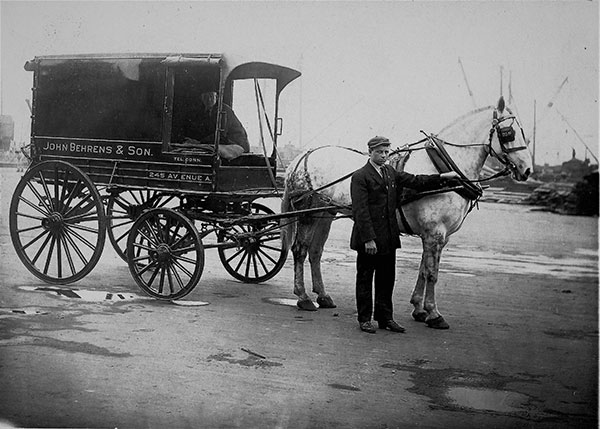 Image courtesy Robert Behrens, November 2018
| |
| Avenue B
| |
| St Marks' Place St Marks' place is "8th Street" between 3rd Avenue and Avenue A. The Hamilton-Holly House 4 St Mark's Place was built in 1831. Originally a private home the building was later used as a meeting hall and apartments.
The German American Shooting Society Clubhouse 12 St. Marks Place. The Deutsch-Amerikanische Schuetzen Gesellschaft at 12 St. Mark's place was headquarters for 24 German shooting clubs from New York City and adjoining areas. The shooting ranges were mainly located on Long Island to the south and east of Brooklyn. "It has a fine club-house at 12 St. Mark's Place, near Third Avenue, which contains, besides the usual club-apartments, a large hall for social events." The Erxmeyer brothers, Fred and Henry, were members of the Hoboken Schuetzen Club. They were active in shooting events in the New York City area. Fred was on the Advisory Board of the National Schuetzen Bund in 1891. See Fred Erxmeyer and/or Henry Erxmeyer Daniel LeRoy House, 20 St Mark's Place, was constructed in 1820.
|
 |
|
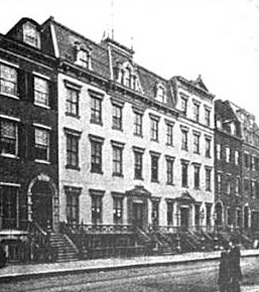
From King's handbook of New York city: an outline history and
description of the of the American metropolis, edited by Moses King, 1892 Arlington Hall, 21 St. Marks Place was the headquarters of the Arlon Society, a German musical club from 1870 to 1887. |
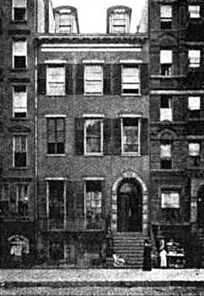 |
| Children's Aid Society, Girls Lodging House, 27 St Mark's Place King's handbook of New York city: an outline history and description of the of the American metropolis, edited by Moses King, 1892 Children's Aid Society Girls Lodging |
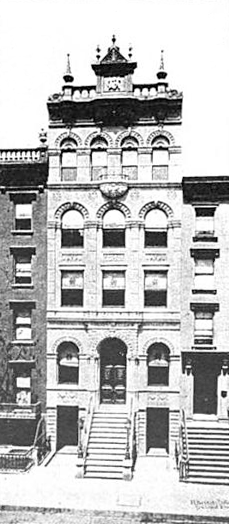 |
| German Odd Fellows Hall 69, St. Mark's Place From King's handbook of New York city: an outline history and description of the American metropolis, edited by Moses King, 1892 The cornerstone was lain for the German Odd Fellows building on November 19, 1889.
|
| Houston to 14th Street
|
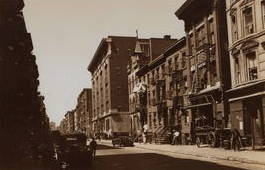 |
E 4th Street N. S. West - Avenue D |
|
With permission of the New York City Library
— Manhattan: 4th Street (East) - Avenue D
Sperr, Percy Loomis, 1935
1890-1964 -- Photographer,
Photographic views of New York City, 1870's-1970's Irma and Paul Milstein Division of United States History
Digital ID: 710889F
Margaret Goehle was born at 374 E 4th Street in April 1897. I do not know when the family left 88 Sheriff Street and moved to 4th Street nor when they moved on again to 709 East 12th Street. | |
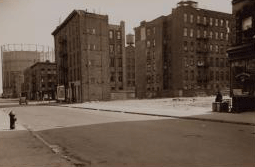 |
East 12th Street S - E from No. 644 |
|
With permission of the New York City Library
— Manhattan: 12th Street (East) - Avenue C
Sperr, Percy Loomis,
1890-1964 -- Photographer,
Photographic views of New York City, 1870's-1970's Irma and Paul Milstein Division of United States History
Digital ID: 7111209F
Lena Goehle, the last child of Peter and Wilhelmine was born at the Lying In Hospital. The family address was 709 E 12th Street. A modern Google map shows this between Avenues C and D. "John Pierpont Morgan, an affluent patient of Dr. Markoe, was responsible for the next important advance, the purchase in 1894 of the Hamilton Fish Mansion on Second Avenue and 17th Street to be used as the Lying-In Hospital. This was later expanded toward 18th Street. In 1899, the facilities were overtaxed and the need for a larger hospital was evident. The generosity of Morgan made possible the demolition of the mansion and the construction of a modern, eight-storied hospital that opened in 1902." | |
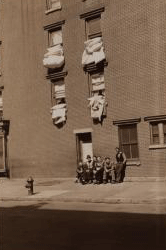 |
Manhattan 12th Street (East) - Avenue C |
|
With permission of the New York City Library
— Manhattan: 12th Street (East) - Avenue C
Sperr, Percy Loomis,
1890-1964 -- Photographer,
Photographic views of New York City, 1870's-1970's Irma and Paul Milstein Division of United States History
Digital ID: 711118F
The general impression of the tenements is one of poverty, dirt, cramped courters, cold water flats, and other discomforts. In fact tenement immigrates were often clean, hard working and industrious. People made do with what they had and most stove for a better life. See Tenement Life now or at the bottom of the page. This image shows the feather beds and pillows out to air. | |
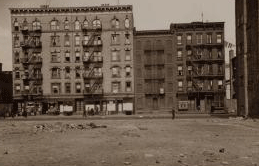 |
Manhattan 12th Street (East) - Avenue C |
|
With permission of the New York City Library
— Manhattan: 12th Street (East) - Avenue C
Sperr, Percy Loomis,
1890-1964 -- Photographer,
Photographic views of New York City, 1870's-1970's Irma and Paul Milstein Division of United States History
Digital ID: 711119F
No's 639 to 647 East 12th Street, north side, west of Avenue C."These images were taken when the buildings in the area were being demolished in the mid 1930s. In fact these buildings could not have been that old. They were probably build in the late 1800s and were typical of many of the tenements of the time. . See Tenement Life now or at the bottom of the page.
| |
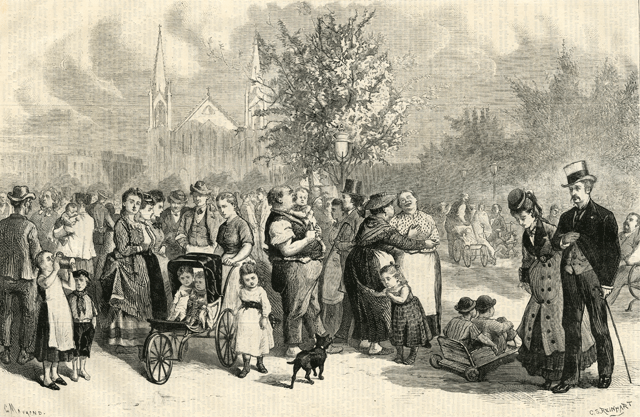
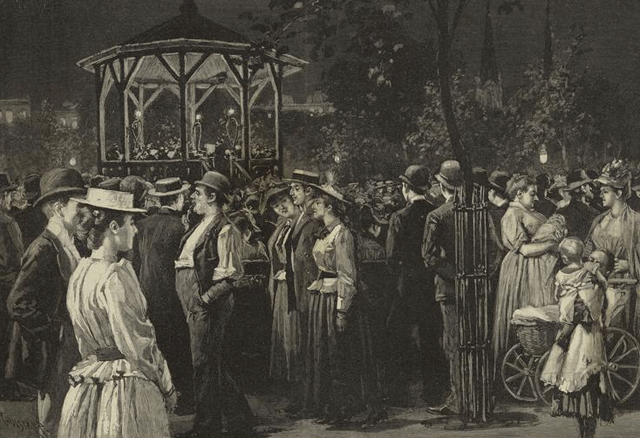
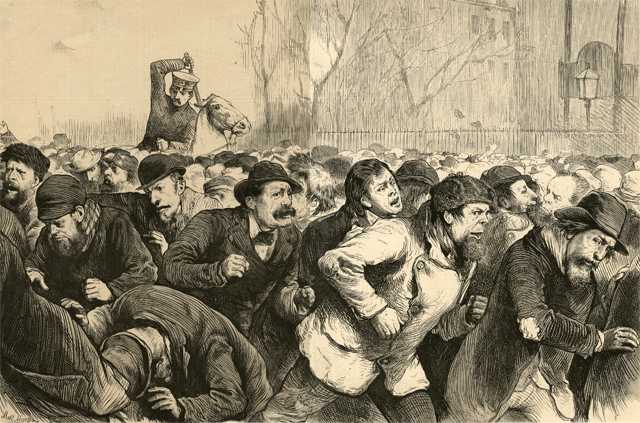
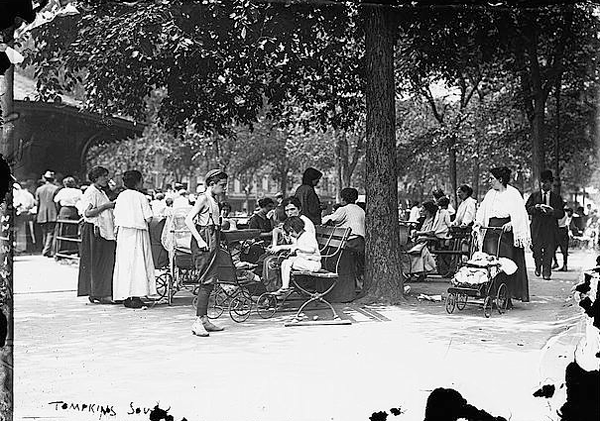
| Tompkins Square Tompkins Square is located between Avenues A and B, 7th and 10th Streets. The park, which opened in 1850, was a breath of fresh air in the congested area of Little German. It was also the scene some unrest:
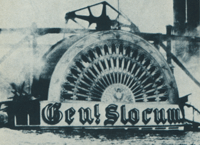
The park contains a monument to the victims of the General Slocum boat disaster in 1904. See General Slocum Disaster
"Tompkins Square is one of the largest in the city, and is laid off without ornament, being designed for a drill ground for the police and military. It occupies the area formed by avenues A and B, and Seventh and Tenth streets." | |
 | |
| New York Public Library Digital Gallery &mdasg;
Poor people's parks - Tompkins Square.
1873
Print
From Hearth and home. (New York : Orange Judd & Co., 1873-) .
Catalog Call Number: PC NEW YC-East
Digital ID: 801462
POOR PEOPLE'S PARKS — TOMPKINS SQUARE
|
 |
|
| HARPER'S WEEKLY September 13, 1873
Collection of Maggie Land Blanck
TOMPKIN'S SQUARE, NEW YORK - OUT FOR A BREATH OF FRESH AIR Those lucky enough to live close to one of the few parks in the Lower East Side could enjoy a more pleasant space — no traffic, less noise, trees, greenery. The church in the background is St. Bridget's Roman Catholic started in 1848 by famine survivors. It is at Avenue B and East Seventh Street. The church has been the center of a lot of controversy in the last several years as the Archdiocese of New York sought to demolish the building. In May 2008 an anonymous donor gave $20 million to save the building and provide an endowment for the parish.
| |
 |
|
| New York Public Library — Popular concert in Tompkins Square, N.Y. Thulstrup, Thure de, 1848-1930 -- Artist 1891 Harper's weekly : a journal of civilization. (New York : Harper' s Weekly Co., 1857-1916.) . Catalog Call Number: PC NEW YC-Parks Digital ID: 806158 Digital Item Published: 10-28-2005; updated 2-13-2009 | |
 |
|
| Frank Leslie's Illustrated Newspaper January 31, 1874
Collection of Maggie Land Blanck
THE RED FLAG IN NEW YORK - RIOTOUS COMMUNIST WORKINGMEN DRIVEN FROM TOMPKINS SQAURE BY THE MOUNTED POLICE, TUES JANUARY 13th There were not that many open spaces in the lower part of the city. A group of mostly immigrant, working-class, laborers requested a permit to demonstrate in the square. Political leaders suspected the group of Communist leanings and at the last minute revoked the permit to hold the rally. Large numbers of men and their families had gathered without realizing they no longer had a permit. Mount police wielding clubs rode down on the crowd. "THE RED FLAG IN NEW YORK" | |
 | |
| Library of Congress,
January 2012 Tompkins Square, between c 1910 and c 1915, Bain News Service | |
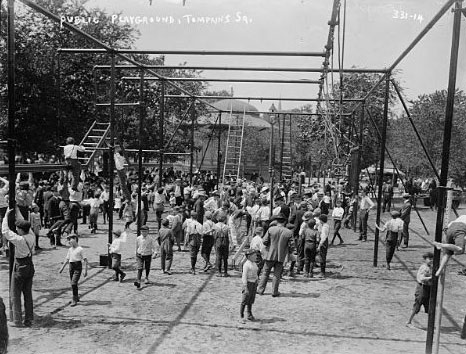 | |
| Library of Congress, Bain News Service
September 2013
Playground Tompkins Square Park | |
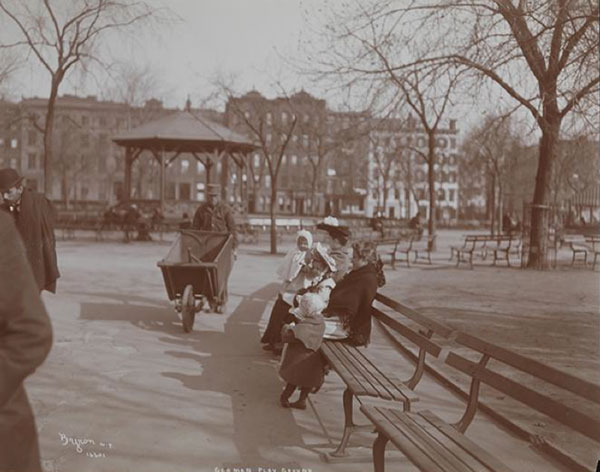 | |
| Museum of the City of New York, September 2013
Tompkins Square Park circa 1903 | |
| Hamilton Fish Park
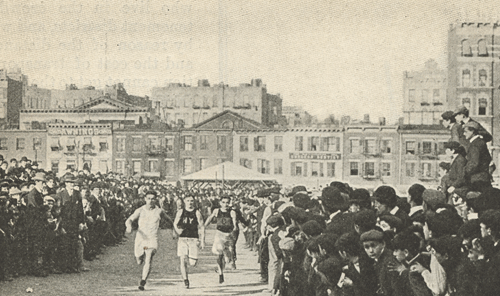
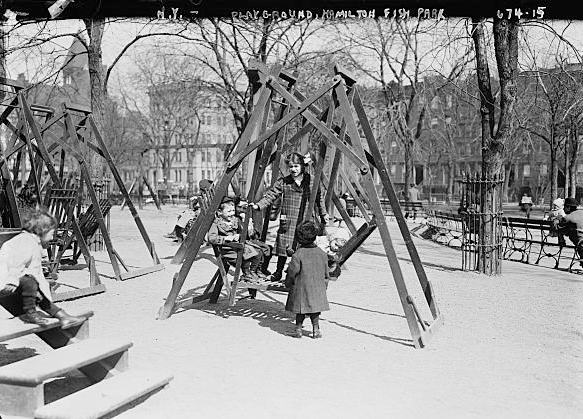
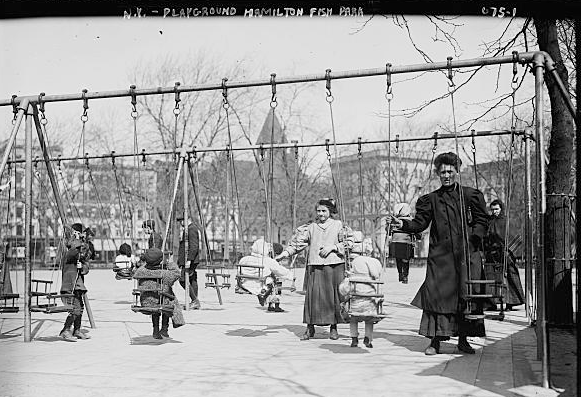
In 1900 it was stated: "Hamilton Fish Park in Sheriff st, in front of Public School No. 22, occupies two blocks which until the buildings were torn down, was the most densely populated part of the city."The park was to included swings, seesaws, sand courts, "and all the attractions of other playgrounds". | |
 | |
| Collection of Maggie Land Blanck, Review, November 1905 Visable in the background is Houston Street at the corner of Sheriff Street. | |
 | |
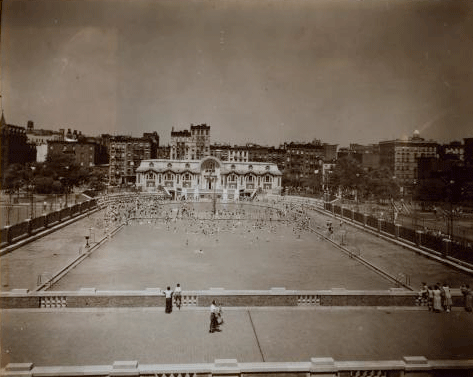
| Collection of Maggie Land Blanck, Review, November 1905 I believe that this view is of the Stanton Street side of Hamilton Fish Park. To see more images of Hamilton Fish Park go to Children, New York City, Tenement Life | |
 |
Hamilton Fish Park
|
|
With permission of the New York City Library —
Manhattan: Pitt Street - Stanton Street
Photographic views of New York City, 1870's-1970's Stephen A. Schwarzman Building
Irma and Paul Milstein Division of United States History,
Digital ID: 720301F
Peter Goehle lived at 139 Pitt Street from his
marriage to Catherine Christ in 1875 until at least the birth of his
daughter Elizabeth in 1876. This image is of the Hamilton Fish Park Pool and gymnasium which backs up to the
100 block of Pitt Street (between Stanton St. and Houston St.). The
buildings to the right in back of the gymnasium is the approximate
location of 139 Pitt Street. The park was completed in 1904
as part of a slum clearance project.
Note: While the New York City Public Library grants permission to web sites like
mine to use the
images in their digital gallery for free, they charge $50 to get an image of better quality. Because that
price would make the whole thing a little too expensive I have had to settle for images that are not as
sharp and detailed as I would like. The Goehle family subsequently moved one block down to 80 Pitt Street (between Stanton and Rivington Streets). They were at 80 Pitt Street for the birth of Frank in November 1878 and at his death in September 1880. A daughter, Louise, was born at that address in June 1880.
| |
 | |
| Library of Congress,
January 2012 Hamilton Fish Park, undated, Bains News Service | |
 | |
| Library of Congress,
January 2012 Hamilton Fish Park, undated, Bains News Service | |
| Rivington Street
| |
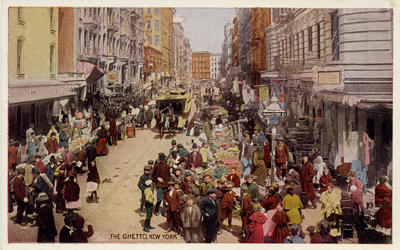 |
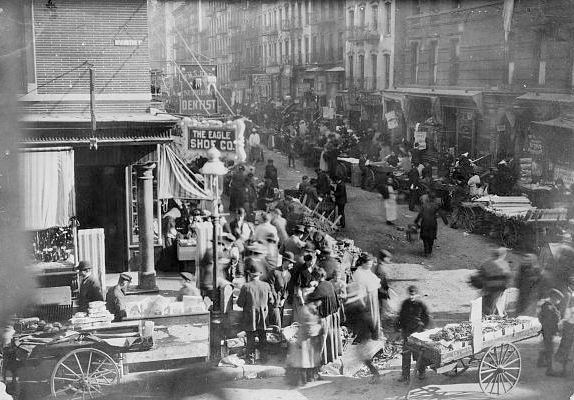
The Ghetto, New York Not posted The sign post says Rivington Street |
| Postcard collection of Maggie Land Blanck | |
Printed on back
The Ghetto
| |
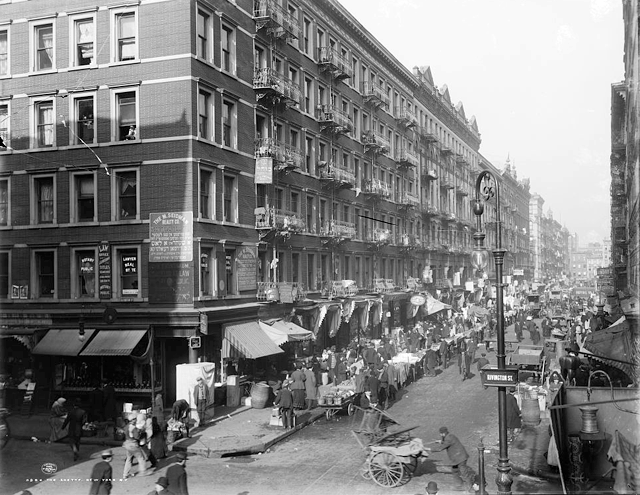 | |
| Library of Congress, The Ghetto, New York, N. Y.
Rivington Street, circa 1909,
January 2012 The street sign says RIVINGTON ST | |
 | |
| Library of Congress, T
Rivington Street, circa 1909,
January 2012 Sunday morning at Orchard and Rivington, New York City c. 1915 Photo by Bain News Service | |
 |
Rivington Street N. S. Columbia Street |
| With permission of the New York Public Library —
Manhattan: Rivington Street - Columbia Street, 1920?
Photographic views of New York City, 1870's-1970's Irma and Paul Milstein
Division of United States History, Local History and Genealogy
Digital ID: 722991F Comments with this image: "Rivington Street, north side, at Columbia Street. The view shows the DeWitt Memorial Church at No 280 Rivington Street, between Columbia and Cannon Streets. These buildings are reported to be over congested; 1 building having 96 people in 62 rooms." | |
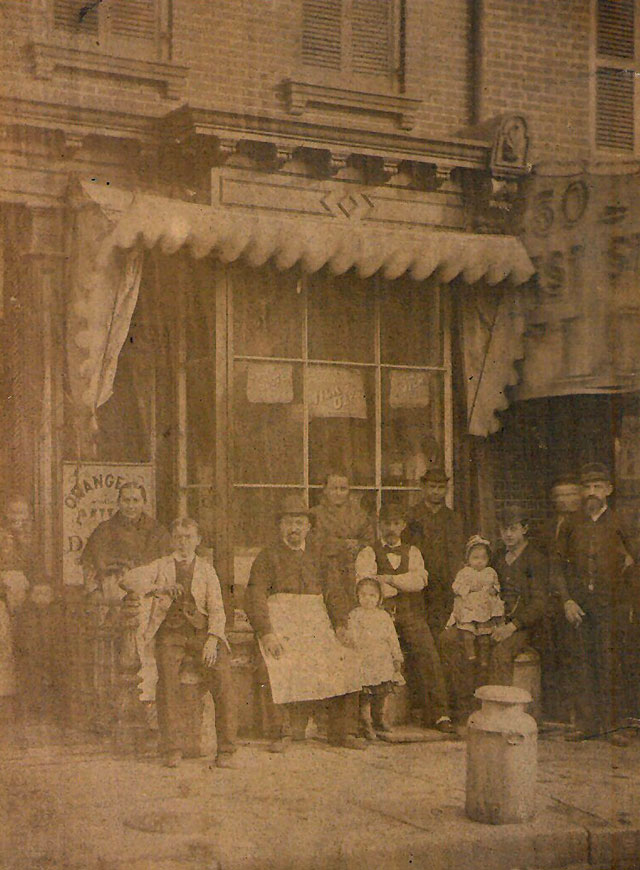
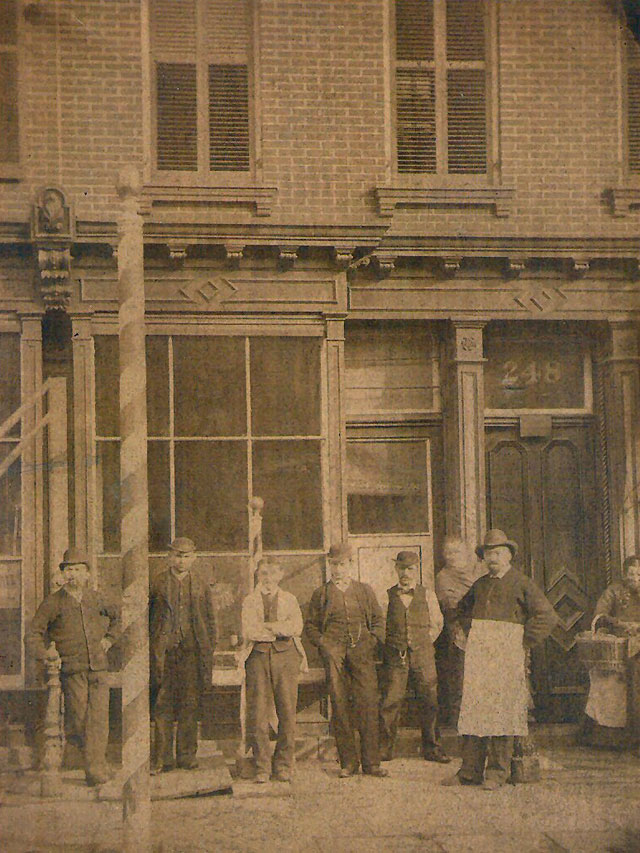
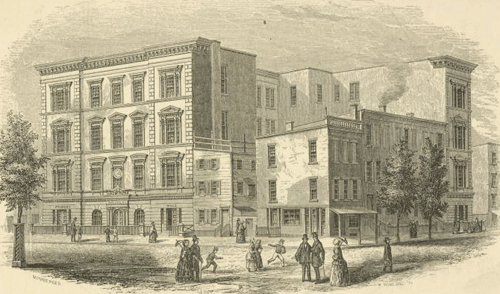
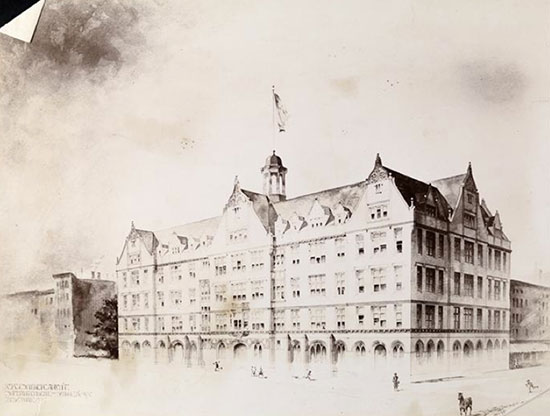

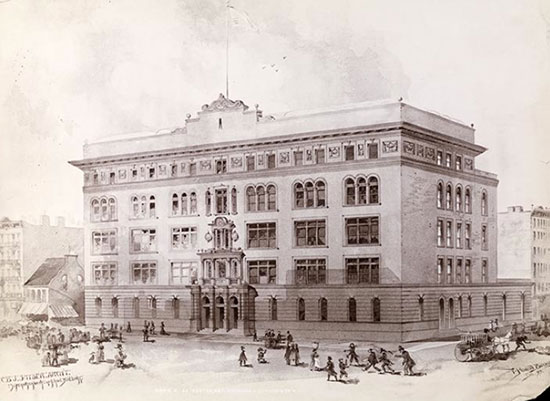
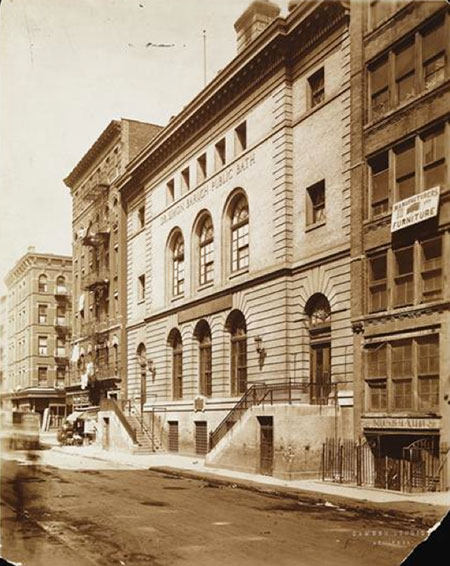
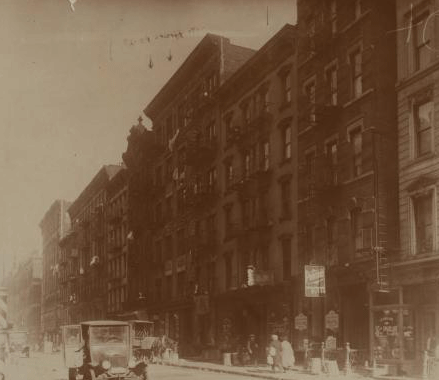
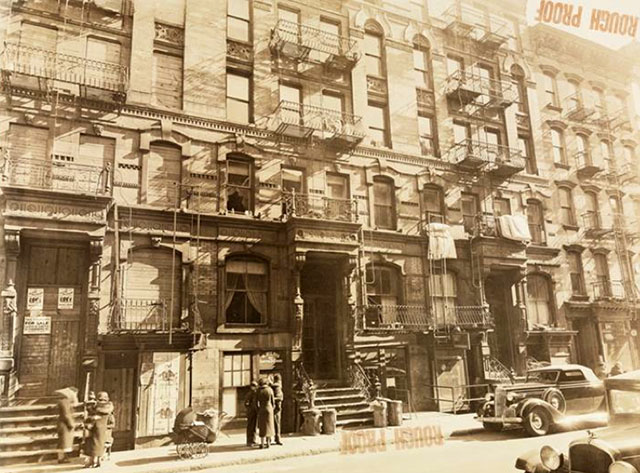


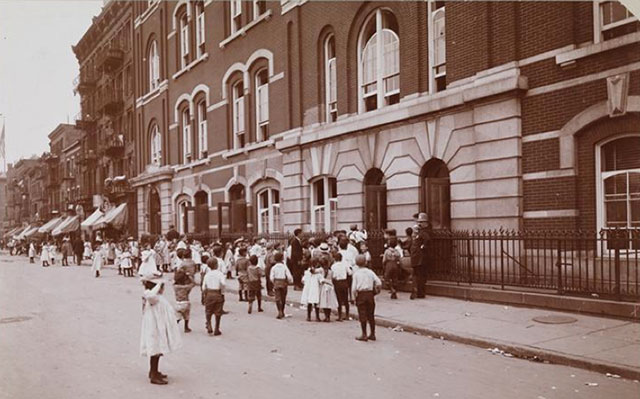
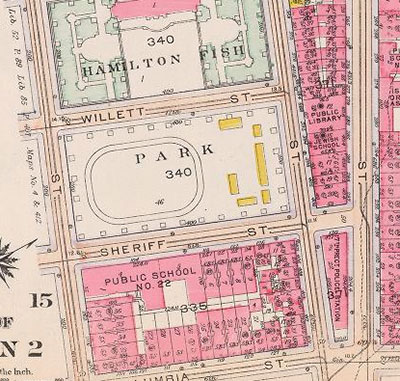
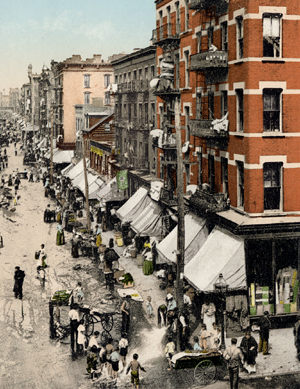
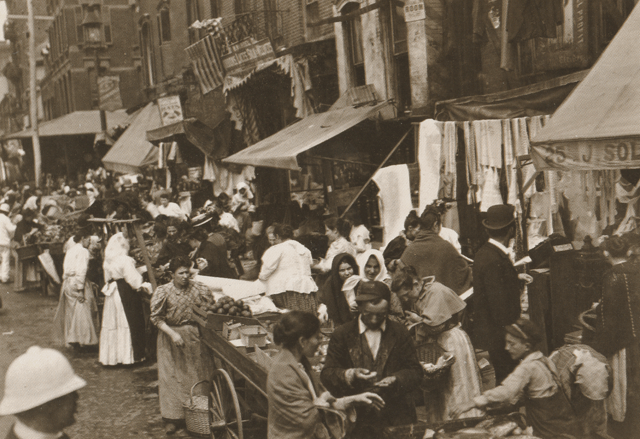
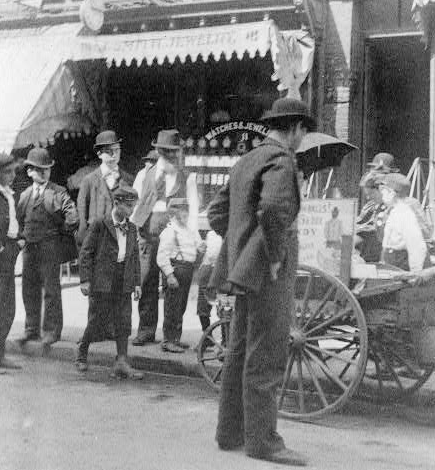
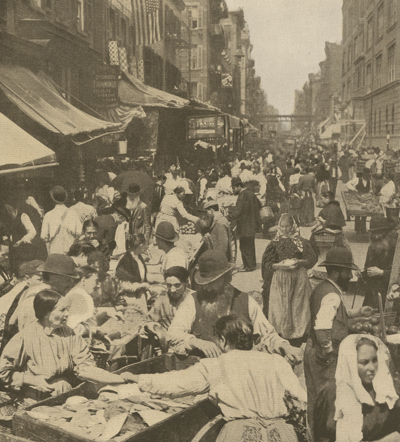



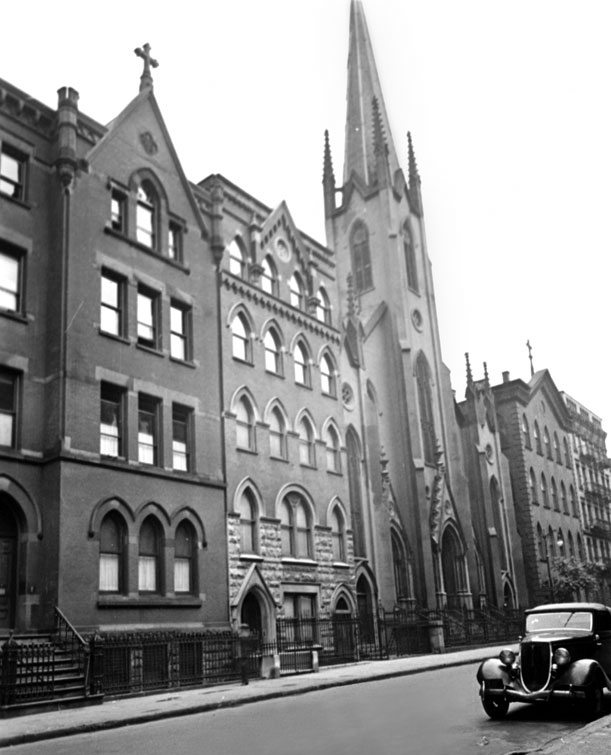
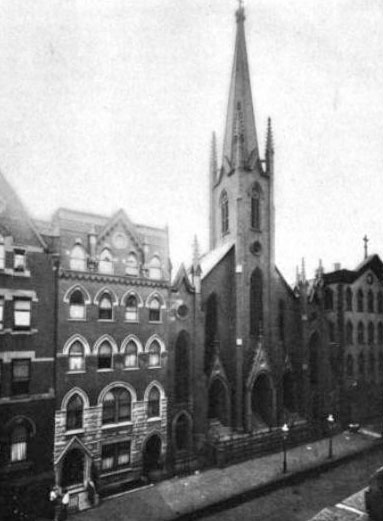
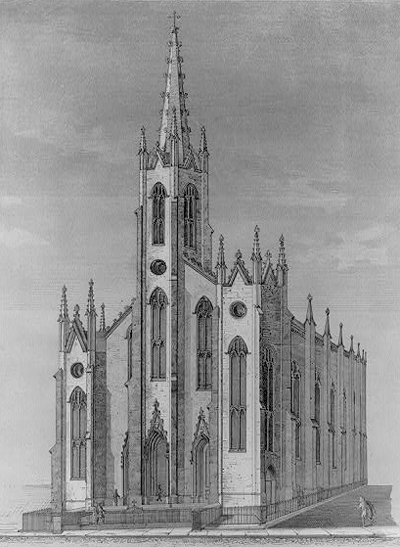
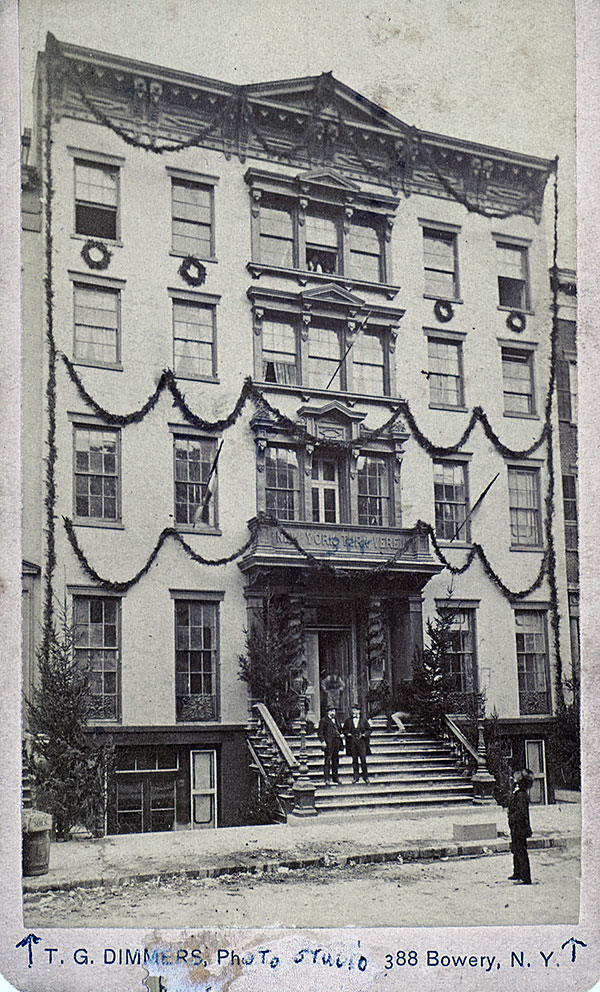 Image courtesy Adam Woodward, April 2018
Theodore G. Dimmers born in Germany circa 1838 had a photography studio at 388 Bowery as early as 1868.
Image courtesy Adam Woodward, April 2018
Theodore G. Dimmers born in Germany circa 1838 had a photography studio at 388 Bowery as early as 1868.







 >
>

 >
>
 >
>




_pg573_NEW-YORK_TURN-VEREIN._66_AND_68_EAST_4TH_STREET.jpg)